
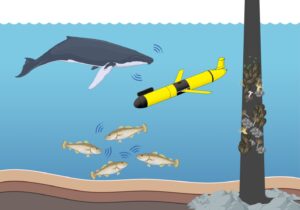
The Southern New England wind farms are located within an area of complex habitats, including a known spawning habitat for Atlantic cod. Atlantic cod form spawning aggregations throughout their geographic range, and male cod exhibit a complex set of spawning and courtship behaviors that includes vocalizations (low frequency grunts). These vocalizations can be detected using Passive Acoustic Monitoring to identify where and when spawning activity is occurring. Rutgers University and Jasco Applied Sciences have monitored for cod spawning during construction activities within the spawning period (November to March) for Orsted in the South Fork Wind (Mar. 2023), Revolution Wind (Jan.-Mar. 2024, Nov 2024-Mar. 2025, Nov. 2025- Mar.2026), and Sunrise Wind (Nov 2024-Mar. 2025, Nov. 2025- Mar.2026) lease areas.
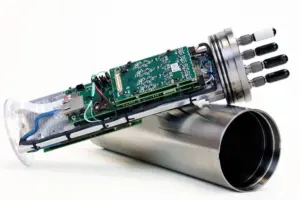 A Slocum glider equipped with JASCO’s OceanObserver™ passive acoustic monitoring system, a telemetry receiver, and oceanographic sensors were used to monitor for cod spawning activity and marine mammals within the project areas. The objectives of these surveys were to determine the presence or absence of spawning cod and marine mammals within the wind farm lease areas. The glider can cover approximately 15km per day and was programmed to perform transects across of the wind farm areas.